Articles

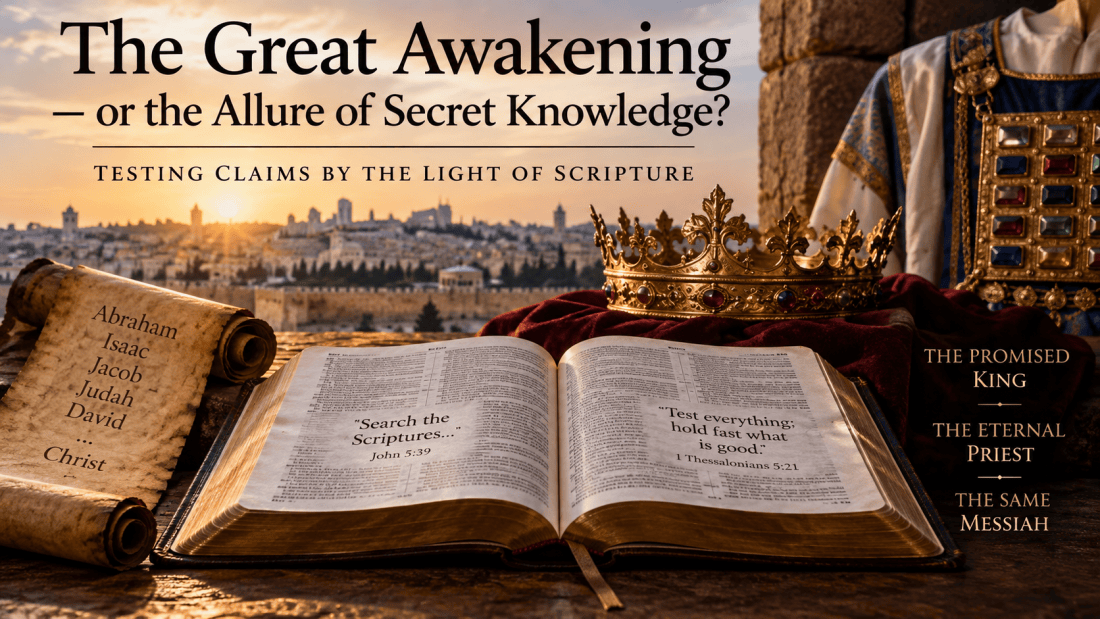
The Great Awakening—or the Allure of Secret Knowledge?

By Teresa Garciduenas 2026

A Christian Review of “Understanding the Great Awakening” by Kelly Ohlson

When I began reading “Understanding the Great Awakening” by Kelly Ohlson, I expected a book about spiritual awakening—perhaps an examination of the Church, the condition of Christianity today, and whether believers are truly measuring themselves against the Word of God.

Instead, I encountered something very different. The book weaves biblical themes together with conspiracy theories, political claims, alleged secret histories, and claims of prophetic insight. Some of the subjects Ohlson discusses concern genuine biblical warnings about evil and deception. That is precisely why Christians must be careful. Something containing elements of truth is not necessarily entirely true.

As Christians, we are commanded to test what we hear: “Test everything; hold fast what is good” (1 Thessalonians 5:21, ESV). That is the standard I believe should be applied to this book.

God Speaks—but That Does Not Make Someone a Prophet

I believe God communicates with His people. Christians have testimonies. We experience conviction, guidance, answered prayer, and moments in our lives when God’s direction becomes unmistakably clear. But experiencing God’s communication does not automatically make someone a prophet.

Throughout Scripture, prophets were called by God for a particular purpose. They did not simply assume the title because they had received a dream, experienced something supernatural, or believed God had spoken personally to them.

More importantly, the message of someone claiming to speak for God must be tested against what God has already revealed. Deuteronomy 13:1–5 warns that even if a sign occurs, God’s people must reject a prophet whose message leads them away from the LORD. Deuteronomy 18:20–22 warns against speaking presumptuously in God’s name.

Jesus warned that “many false prophets will arise and lead many astray” (Matthew 24:11, ESV). John likewise tells Christians, “Beloved, do not believe every spirit, but test the spirits to see whether they are from God” (1 John 4:1, ESV).

Therefore, the question isn’t simply, “Did this person experience something supernatural?” The question is: Does the message align with Scripture? A genuine message from God will not require us to abandon God’s revealed truth for a contradictory message, another gospel, or supposedly superior secret knowledge. Paul even tells us that if an angel from heaven proclaimed a gospel contrary to the one already received, it was to be rejected (Galatians 1:8).

We Were Already Warned

Another problem I encountered is the presentation of information as though Christians are experiencing a new awakening to realities that have been hidden from us. But what exactly are we awakening to? That Satan exists? That evil operates in the world? That governments and rulers can become corrupt? That people deceive one another? That false teachers will infiltrate the Church? That spiritual powers oppose God?

None of this is secret knowledge. God already warned us.

Paul writes that “we do not wrestle against flesh and blood,” but against rulers, authorities, cosmic powers over this present darkness, and spiritual forces of evil (Ephesians 6:12, ESV). Scripture repeatedly warns about deception, lawlessness, false prophets, false teachers, doctrines of demons, and spiritual wickedness. Jesus begins His Olivet Discourse with the warning, “See that no one leads you astray” (Matthew 24:4, ESV).

This is why I struggle with calling the discovery of conspiracies a “Great Awakening.” Christians were never supposed to be asleep concerning evil. We were already warned. Our awakening should therefore not be an awakening to conspiracy. It should be an awakening to Christ.

The Problem of Secret Knowledge

One of my greatest concerns with this book is the impression that the reader is being given knowledge that other people do not possess. The underlying message can begin to sound like this: You have been asleep. The truth has been hidden. The world isn’t what you have been told. Now you are going to learn what is really happening.

That should immediately cause a discerning Christian to slow down. Christianity is not a religion built upon an elite group possessing secret knowledge unavailable to ordinary believers. The Gospel was proclaimed openly. Our salvation doesn’t depend upon discovering the correct conspiracy. It depends upon Jesus Christ.

There is also a powerful problem created when established facts, biblical truths, speculation, political opinions, and unsupported historical claims are woven together. Because the reader recognizes truth in some statements, he or she may unconsciously grant credibility to everything that follows. But biblical discernment doesn’t work that way. Every claim must stand on its own evidence.

The Judean and Khazar Claims

This becomes especially problematic in the book’s discussion of Judeans, Khazars, and Jewish history. Ohlson writes: “Outsiders called them Judeans, but they were not Jews. That term was not created until the 18th century.” This is historically problematic.

Judea and Judeans existed in antiquity, centuries before the eighteenth century. The terminology developed from Judah/Judea and appears in ancient historical contexts long before medieval Khazaria. The book then connects Sumer, Babylon, Canaan, Khazaria, Ashkenazim, and Judeans into what appears to be a continuous historical lineage. But these populations cannot simply be combined. [2]

There is, however, an ancient population that is extremely important when discussing the ethnic and religious complexities of Judea: the Idumeans. The Idumeans were associated with ancient Edom and were originally distinct from Israel. During the Hasmonean period, John Hyrcanus conquered Idumean territory and required its inhabitants who remained to accept circumcision and Jewish customs. Josephus records this incorporation centuries before the medieval Khazar period.

This demonstrates that Second Temple Judea was historically complicated. Some people incorporated into the Jewish population were of Idumean ancestry. Herod’s dynasty provides a famous example of Idumean ancestry within the Judean political world. But none of that demonstrates that Judeans were actually medieval Khazars.

The chronology makes such an argument impossible. Second Temple Judeans existed before Christ. Josephus wrote during the first century AD. The Khazar conversion to Judaism occurred centuries afterward. Whatever role Khazars may have played in later Jewish history, they cannot be used to explain away the existence of Jews or Judeans documented many centuries before them.

The Judean Error and the Identity of the Messiah

The historical errors concerning the Judeans are not merely an academic concern. They have theological consequences because the New Testament identifies Jesus Christ within the history and promises of Israel. If a reader accepts the claim that the Judeans of the Second Temple period were not genuinely connected to the Jewish people, that reader may begin questioning the identity of Jesus Himself. Was He truly the promised son of David? Did He fulfill the covenant promises? What becomes of the genealogies that the Gospels deliberately preserve?

Mary’s Genealogy and the House of David

The New Testament clearly presents Jesus as the promised descendant of David and a member of the tribe of Judah. Mary is the mother from whom Jesus actually took His human flesh, while Joseph was not His biological father. For that reason, Mary’s Davidic connection is important to the Christian understanding of Christ’s human descent.

Luke 1:27 describes Mary as the virgin betrothed to Joseph, who was of the house of David. Luke then announces that Mary’s Son will receive “the throne of his father David” (Luke 1:32, ESV). Paul likewise says that God’s Son was “descended from David according to the flesh” (Romans 1:3, ESV), and Hebrews explicitly states that “our Lord was descended from Judah” (Hebrews 7:14, ESV). Taken together, these passages establish the New Testament’s insistence that Jesus’ human ancestry is genuinely Davidic and Judean.

One longstanding Christian interpretation understands Matthew 1 as preserving Jesus’ legal royal genealogy through Joseph and Luke 3 as preserving His biological Davidic ancestry through Mary. On this reading, Luke’s line runs through David’s son Nathan rather than Solomon (Luke 3:31), while Matthew follows the royal line through Solomon (Matthew 1:6). Luke does not explicitly call the genealogy Mary’s, so this should be identified as an interpretation of the two Gospel genealogies rather than a statement made directly by Luke.

Mary was also related to Elizabeth, whom Luke explicitly identifies as “of the daughters of Aaron” (Luke 1:5, 36). This demonstrates a family relationship with an Aaronic household, but Scripture does not tell us precisely how that relationship was formed and does not identify Mary herself as belonging to the tribe of Levi. A family could contain connections between tribes through marriage.

This distinction strengthens rather than weakens the Melchizedekian argument. Hebrews deliberately points out that Jesus came from Judah—a tribe from which Moses appointed no priests—and then explains that Christ’s priesthood is of a different order: “You are a priest forever, after the order of Melchizedek” (Hebrews 7:14–17, ESV). Jesus is therefore the Davidic Messiah from Judah and the eternal High Priest, not because He descended from Aaron, but because God appointed Him Priest after the order of Melchizedek.

The New Testament is explicit that Jesus belongs to Judah and David. Paul writes that God’s Son was “descended from David according to the flesh” (Romans 1:3, ESV). Hebrews states, “For it is evident that our Lord was descended from Judah” (Hebrews 7:14, ESV). These declarations are central to the biblical witness concerning the Messiah. [9]

The King and Priest After the Order of Melchizedek

Under the Mosaic covenant, the Davidic kingship and Aaronic priesthood were ordinarily distinct. Kings came from Judah, while the Aaronic priesthood came from Levi. Yet Psalm 110 foretells a figure who is both exalted at God’s right hand and appointed to an everlasting priesthood: “The LORD has sworn and will not change his mind, ‘You are a priest forever after the order of Melchizedek’” (Psalm 110:4, ESV). [10]

Jesus fulfills this prophecy. Hebrews explains that His priesthood is not derived from the ordinary Levitical succession. He is appointed by God’s oath and possesses an indestructible life (Hebrews 7:16–17, 20–22). His priestly authority therefore comes from God and is not dependent upon proving a Levitical maternal genealogy. [11]

Zechariah provides another striking prophetic image: “And there shall be a priest on his throne, and the counsel of peace shall be between them both” (Zechariah 6:13, ESV). I understand this as part of the prophetic anticipation of the Messiah’s united royal and priestly ministry. Jesus is the Son of David, the Lion of the tribe of Judah, and the High Priest after the order of Melchizedek. [12]

Why This Matters to the Review

This is why Ohlson’s treatment of the Judeans requires more than a passing historical correction. When an author presents ancient Judeans as though they were not genuinely Jewish, the implications can reach directly into Christology—the biblical doctrine of who Jesus is.

The Gospels preserve genealogies for a reason. The apostles identify Jesus with Judah and David for a reason. Hebrews explains His priesthood through Melchizedek for a reason. These are not disconnected details. Together, they testify that Jesus is the promised Messiah who fulfills God’s covenant purposes.

When Ohlson claims that the Judeans were not genuine Jews, she is not merely making a historical error. Her claim strikes at the historical and tribal identity Scripture gives to Jesus Christ. The New Testament explicitly declares that Jesus was descended from David according to the flesh and that our Lord arose from Judah (Romans 1:3; Hebrews 7:14). This makes the error even more serious: denying the genuine identity of the Judeans can cause readers to question the very lineage Scripture uses to identify Jesus as the promised Messiah. Yet Hebrews also shows the extraordinary fulfillment of prophecy: although Jesus arose from Judah rather than Levi, God appointed Him eternal High Priest after the order of Melchizedek. He is the Davidic King and the Melchizedekian Priest. To cast doubt upon Judah and the Judeans therefore introduces unnecessary doubt concerning the identity of our Savior and the fulfillment of God’s promises.

Jesus’ identity does not depend upon a modern conspiracy theory, a medieval Khazar genealogy, or a revisionist account of the Judeans. It rests upon the witness of Scripture and the fulfillment of God’s promises. The Christian response is not to seek a new secret history, but to return to the biblical record and examine what God has already revealed.

Evil Is Real—but That Doesn’t Make Every Theory True

I absolutely believe Scripture’s teaching concerning spiritual evil. Satan is real. Spiritual warfare is real. Human beings can become extraordinarily corrupt. Scripture itself describes rulers, kingdoms, and systems standing against God.

Paul calls Satan “the prince of the power of the air” (Ephesians 2:2, ESV). I find our modern concept of information traveling through the “airwaves” an interesting analogy, but we should distinguish such an observation from Paul’s original meaning.

The same caution must be exercised with symbols and ceremonies. A symbol may resemble an ancient symbol. A modern ceremony may remind us of an ancient pagan practice. That resemblance can legitimately cause us to investigate. But resemblance is not proof of historical connection. If we criticize historians for making unsupported connections, Christians cannot turn around and make unsupported connections simply because they support conclusions we already believe. Truth does not need that kind of help.

Discernment Works Both Ways

We should not automatically reject something because it has been labeled a “conspiracy theory.” History contains conspiracies. Governments lie. Institutions become corrupt. People conceal wrongdoing. Scripture certainly does not teach us to trust human authorities blindly.

But neither should Christians believe something merely because someone tells us, “They don’t want you to know this.” That statement proves nothing. Discernment works both ways.

Don’t believe something simply because the mainstream says it. And don’t believe something simply because alternative media says the mainstream is hiding it. Investigate it. Check the source. Check the date. Check the historical chronology. Read the biblical passage in context. Distinguish documented fact from interpretation. Above everything else, compare spiritual teaching with the Word of God.

The Christian Awakening

I agree with Ohlson on one fundamental point: there is tremendous evil and deception in this world. Where I disagree is what Christians need in response.

We don’t need initiation into secret knowledge. We don’t need another gospel. And we don’t need a modern prophet to tell us that deception is coming. Jesus already told us.

Perhaps the awakening the Church needs isn’t discovering what Satan has supposedly hidden. Perhaps it is rediscovering what God has already revealed.

Read the Word. Know the Word. Test the spirits. Examine the evidence. Reject what is false. Hold tightly to what is true. And most importantly, keep our eyes on Jesus Christ rather than becoming consumed with uncovering every hidden work of darkness.

The greatest deception may not be convincing Christians that evil doesn’t exist. It may be getting Christians so fascinated with darkness that they stop looking toward the Light.

Our awakening is not to secret knowledge. Our awakening is to Christ our Lord and Savior. 

References and Source Notes

Scripture references use the English Standard Version (ESV). Historical sources are distinguished from the author’s theological interpretation. The book quotation is transcribed from the supplied photographs; the edition, publication year, and exact page number should be verified against the physical book before publication.

[1] Ohlson, Kelly. Understanding the Great Awakening. Edition, publisher, and publication year to be verified. Quotation supplied from the reader’s photographs, including page 28. The book’s bibliographic details have not been independently confirmed.

[2] Josephus. Jewish Antiquities, Book 13, especially 13.257–258. This first-century historical work distinguishes Idumeans from Jews and documents their incorporation. See also the ancient biblical and historical usage of Judah and Judea.

[3] Josephus. Jewish Antiquities 13.257–258. Primary-source account of John Hyrcanus’s conquest of Idumean cities and the adoption of Jewish law by the Idumeans. https://www.attalus.org/translate/aj_13b.html

[4] Josephus. Jewish Antiquities, Book 14, especially 14.8–10, concerning Antipater’s Idumean ancestry. The precise passage should be checked against the edition used for publication.

[5] Behar, D. M., et al. (2013). No evidence from genome-wide data of a Khazar origin for the Ashkenazi Jews. Human Biology, 85(6), 859–900. https://doi.org/10.3378/027.085.0604. See also: Stampfer, S. (2013). Did the Khazars convert to Judaism? Jewish Social Studies, 19(3), 1–72. The scope and historical details of Khazar conversion remain debated; a medieval Khazar origin cannot explain the existence of ancient Judeans.

[9] The Holy Bible, English Standard Version. Romans 1:3; Hebrews 7:14; Revelation 5:5. These passages identify Jesus with David and Judah.

[10] The Holy Bible, English Standard Version. Genesis 14:18–20; Psalm 110:1–4; Hebrews 5:5–10; 7:1–28. These are the principal texts for the Melchizedekian priesthood.

[11] The Holy Bible, English Standard Version. Hebrews 7:11–28, especially 7:14–17 and 7:20–22. Hebrews grounds Christ’s priesthood in divine appointment and indestructible life, rather than Levitical descent.

[12] The Holy Bible, English Standard Version. Zechariah 6:12–13; Psalm 110:1–4; Hebrews 8:1–2. The application of Zechariah’s priest-on-a-throne imagery to Christ is the author’s messianic interpretation.

Mary and Davidic descent. The Holy Bible, English Standard Version: Luke 1:27, 32; Romans 1:3; Hebrews 7:14. These passages establish Jesus’ Davidic/Judah identity; Luke does not explicitly state Mary’s tribe.

The Marian-genealogy interpretation. Luke 3:23–38; Matthew 1:1–17. A longstanding Christian interpretation reads Matthew as Joseph’s legal/royal line and Luke as Mary’s biological Davidic line. This is an interpretive solution to the differences between the Gospel genealogies, not an explicit statement in Luke.

Mary and Elizabeth. Luke 1:5, 36. Elizabeth is “of the daughters of Aaron” and is Mary’s relative. The passage establishes kinship but does not specify Mary’s tribe or the precise mechanism of the relationship.

Melchizedekian priesthood. Psalm 110:4; Hebrews 5:5–10; 7:11–28. Hebrews explicitly contrasts Jesus’ descent from Judah with the Levitical priesthood and grounds His priesthood in God’s appointment after the order of Melchizedek.

Additional Scripture References

Prophetic discernment: Deuteronomy 13:1–5; 18:20–22; Matthew 7:15–20; 24:4, 11, 24; Galatians 1:8; 1 Corinthians 14:29; 1 Thessalonians 5:20–21; 1 John 4:1. Spiritual warfare and deception: Ephesians 2:2; 6:12; 2 Thessalonians 2:9–11; 1 Timothy 4:1; 2 Timothy 4:3–4; 2 Peter 2:1.

Destroying the Image

By Teresa Garciduenas | 2026

The twenty-first century has witnessed an unprecedented cultural shift in how Western societies understand human identity. Where previous generations understood biological sex—male and female—as foundational to personal identity, contemporary discourse increasingly treats gender as a purely subjective category—a matter of internal feeling divorced from physical embodiment. This represents far more than a social or political development. For those who take Scripture seriously, this rupture between body and identity strikes at the heart of what it means to be human, threatening the very foundation of the imago Dei and leaving individuals spiritually vulnerable in ways that echo the warnings of biblical eschatology. This article argues that the contemporary gender identity framework, insofar as it severs the connection between embodied reality and personal identity, fundamentally distorts the image of God in humanity. Moreover, this distortion creates a spiritual vulnerability—a willingness to accept identity markers that contradict observable reality—that prefigures and prepares the way for the eschatological deceptions Scripture warns against, including systems of identification that require allegiance to falsehood.

Male and Female: The Imago Dei and Embodied Creation

The opening chapter of Genesis establishes the theological foundation for all biblical anthropology: “So God created man in his own image, in the image of God he created him; male and female he created them” (Genesis 1:27, ESV). This verse has been the subject of extensive theological reflection throughout church history, but several elements demand our attention in the current cultural moment. First, the imago Dei—the image of God in humanity—is explicitly connected to sexual differentiation. The text does not say God created humanity and then made them male and female as an afterthought or mere biological detail. Rather, the creation of humanity as male and female is presented as integral to what it means to bear God’s image. The parallelism of the verse structure emphasizes this: “in the image of God he created him; male and female he created them.” The image-bearing and the sexual differentiation are woven together in the fabric of the text itself. Second, this differentiation is embodied and physical. Genesis 1 describes the creation of material reality—light and darkness, sea and land, vegetation and animals—culminating in the creation of humanity from the dust of the earth (Genesis 2:7). The human person is not a disembodied spirit temporarily housed in a physical shell; rather, embodiment is essential to human nature. We are, in the language of Genesis 2:7, nephesh chayyah— living beings, ensouled bodies. The body is not incidental to identity; it is constitutive of it. Third, this embodied sexual differentiation is declared “very good” (Genesis 1:31). It is not a cosmic accident, a biological inconvenience, or a social construct to be transcended. It is part of God’s intentional design, reflecting something about the nature of reality itself and about the God in whose image we are made. Genesis 1:27-28 establishes the theological foundation: God created humanity male and female in His image, and commanded them together to be fruitful, multiply, and have dominion over creation. This was not an afterthought or a secondary arrangement. Woman was created as man’s equal and corresponding helper—not subordinate, but complementary—to fulfill God’s purposes in partnership. Genesis 2:18 makes this explicit: “It is not good for the man to be alone; I will make a helper corresponding to him.” The woman is created from man’s own substance, presented to him as one who shares his nature and dignity, called to join him in the sacred work of tending God’s creation and extending His kingdom through procreation and stewardship. Male and female are thus created with equal worth and shared vocation, each bearing the image of God, each called to participate in His creative and redemptive purposes. This complementary differentiation—rooted in embodied reality and grounded in God’s intentional design— reflects the goodness of creation itself.

The Rupture: When Identity Divorces Reality

Contemporary gender identity ideology introduces a radical rupture into this understanding of human nature. At its core, it proposes that one’s “true” identity may be fundamentally at odds with one’s physical body—that a person with a male body may actually be female, or vice versa, based on internal feelings, psychological states, or self- perception. This represents a profound philosophical and theological departure. It introduces a dualism that Christianity has historically rejected: the idea that the “real you” is something internal and immaterial, while the body is merely an external shell that may or may not accurately reflect that inner reality. This is closer to Gnostic dualism—which viewed the material world as inferior or even evil, and the spiritual as superior—than to biblical anthropology, which insists on the goodness of embodied existence. The implications are far-reaching. If identity can be divorced from embodied reality, then identity becomes entirely subjective—a matter of self-declaration rather than objective fact. The body, which Genesis presents as integral to human identity, becomes instead a potential source of deception, something that might “lie” about who you really are. This inverts the biblical framework, in which physical reality is part of God’s good creation and therefore trustworthy, while subjective feelings are recognized as potentially deceptive (Jeremiah 17:9: “The heart is deceitful above all things”). Moreover, this rupture requires others to participate in the denial of observable reality. When society is asked to affirm that someone with a male body is actually female, it is being asked to collectively agree that reality is whatever we declare it to be—that words can be severed from their referents, that categories can be emptied of objective content, that truth itself is negotiable. This is not merely a matter of being kind or compassionate to those who experience distress about their bodies. Compassion does not require the denial of truth. Rather, this represents a fundamental epistemological shift: from a worldview in which truth is discovered (because it exists independently of our perception) to one in which truth is constructed (because it is whatever we agree it to be).

The Spiritual Danger: Truth, Reality, and Deception

From a biblical perspective, this rupture between identity and embodied reality is not merely philosophically problematic—it is spiritually dangerous. Scripture consistently presents the acceptance of falsehood as a gateway to deeper spiritual deception and bondage. Jesus identifies Satan as “the father of lies” (John 8:44) and states that “there is no truth in him.” The demonic realm operates through deception, through the distortion of reality, through convincing people to believe things that are not true. Conversely, Jesus identifies Himself with truth: “I am the way, the truth, and the life” (John 14:6). The Holy Spirit is called “the Spirit of truth” (John 16:13). Truth and reality are not arbitrary categories in biblical theology; they are intimately connected to the nature of God Himself. When we accept identity categories that contradict physical reality, we are training ourselves to privilege subjective feeling over objective truth. We are practicing a form of epistemological rebellion—insisting that reality must conform to our desires rather than submitting our understanding to reality as it is. This is spiritually formative in precisely the wrong direction. Paul warns in 2 Thessalonians 2:10-12 about those who “refused to love the truth” and therefore become vulnerable to “a powerful delusion so that they will believe the lie.” The passage suggests a progression: first comes the refusal to love truth, then comes the vulnerability to deception, and finally comes the active belief in falsehood. The acceptance of gender identity ideology—which requires the denial of embodied reality—follows exactly this pattern. Furthermore, this acceptance conditions people to override their own perception of reality in favor of socially-mandated falsehood. When a person with male anatomy, male chromosomes, and male physiology is presented as female, everyone is being asked to deny what they can plainly observe. This is not unlike the dynamic in Hans Christian Andersen’s “The Emperor’s New Clothes”—except that in our cultural moment, those who point out the obvious truth are punished rather than celebrated. This conditioning is spiritually significant. It trains people to accept that authority figures can define reality, that social pressure can override truth, and that one’s own perception and reason must be subordinated to collective declarations. These are precisely the conditions that make populations vulnerable to totalitarian control and spiritual deception.

The Mark and End-Times Identification

This brings us to the eschatological dimension of the issue. Scripture warns of a time when humanity will face a choice regarding a “mark” of identification and allegiance. Revelation 13:16-17 describes this mark: “It also forced all people, great and small, rich and poor, free and slave, to receive a mark on their right hands or on their foreheads, so that they could not buy or sell unless they had the mark, which is the name of the beast or the number of its name.” Much speculation has surrounded the nature of this mark, but several elements are clear from the text. First, it is a system of identification and control—those without it cannot participate in economic life. Second, it represents allegiance to a false authority—the beast, which is presented as a counterfeit of Christ. Third, accepting it has eternal consequences: “If anyone worships the beast and its image and receives its mark on their forehead or on their hand, they, too, will drink the wine of God’s fury” (Revelation 14:9-10). Some interpreters have noted a possible symbolic connection between contemporary cultural emblems and the imagery of Revelation 6:2, which describes the first of the four horsemen: “I looked, and there before me was a white horse! Its rider held a bow, and he was given a crown and he rode out as a conqueror bent on conquest.” The bow held in the rider’s hand has been noted by some as potentially evoking the rainbow covenant sign of Genesis 9:12-17. However, the Greek text does not explicitly identify the bow as a rainbow, nor does Scripture itself make this connection. This remains an interpretive possibility rather than a doctrinal claim. If such a symbolic association were present, it could represent a counterfeit peace—a false promise of harmony and inclusion masking conquest through ideology—or the appropriation of a sign that God Himself established as a covenant of mercy. The rider’s identity in Revelation 6, however, is established through his actions: he rides forth as a conqueror, suggesting ideological or spiritual conquest rather than military invasion. The text itself is the primary guide; symbolic associations remain secondary and speculative. Nevertheless, within the framework of this article’s argument, such imagery—whether present or not—would illustrate how false systems appropriate sacred symbols and promise peace while advancing spiritual deception and control. The connection to contemporary gender identity ideology may not be immediately obvious, but it becomes clearer when we consider what accepting the mark requires: the willingness to accept an identity marker that contradicts reality in order to participate in society. Consider the parallels. Gender identity ideology increasingly functions as a system of identification and control. In many jurisdictions, one cannot participate fully in public life— cannot work in certain professions, attend certain schools, or access certain services— without affirming gender identity doctrine. Those who refuse to use preferred pronouns or who insist on the reality of biological sex face social ostracism, professional consequences, and in some cases legal penalties. More fundamentally, both systems require allegiance to falsehood. Just as the mark of the beast represents worship of a false authority, gender identity ideology requires affirmation of false identity categories. Both demand that individuals override their perception of reality in favor of socially-mandated declarations. Both condition people to accept that authority can define truth, that words can be severed from meaning, and that survival requires participation in collective delusion. This is not to say that contemporary gender identity documents or policies are the mark of the beast described in Revelation. Rather, the argument is that accepting identity categories divorced from reality creates the spiritual and psychological conditions that make accepting such a mark possible. It is a form of spiritual preparation—a training in the acceptance of falsehood, a conditioning to override conscience and reason in favor of social conformity. Paul’s warning in Romans 1 is instructive here. He describes a progression of spiritual decline that begins with suppressing the truth (v. 18), continues through exchanging the truth of God for a lie (v. 25), and results in God giving people over to a “debased mind” (v. 28). Significantly, this passage explicitly mentions the distortion of sexual and bodily reality as both a symptom and a consequence of this spiritual rebellion. When humanity rejects the truth about God, one of the first casualties is the truth about embodied human nature. The eschatological implications are sobering. If the end times involve a global system requiring allegiance to falsehood as a condition of participation in society, then populations must first be conditioned to accept such a system. They must be trained to believe that identity is whatever authority declares it to be, that reality is negotiable, and that survival requires affirming what one knows to be false. Gender identity ideology provides exactly this training. Moreover, the distortion of the imago Dei through the denial of created sexual differentiation may itself be a form of spiritual preparation for the mark. If humanity can be convinced that the most basic categories of human identity—male and female—are arbitrary and changeable, then accepting an externally-imposed identity marker becomes far easier. If we have already accepted that our bodies might “lie” about who we are, then accepting an external mark that contradicts our nature becomes simply an extension of the same principle.

Returning to Embodied Truth

The way forward requires a return to biblical anthropology and a recovery of embodied truth. This is not merely a matter of winning cultural arguments or resisting political trends. It is a matter of spiritual survival—of maintaining the integrity of the imago Dei and resisting the conditioning that prepares populations for eschatological deception. First, we must reaffirm that being made in God’s image includes our embodied existence as male or female. This is not incidental to human identity but constitutive of it. Our bodies are not arbitrary biological accidents but part of God’s intentional design, declared “very good” in creation. To reject one’s sexed body is to reject part of what it means to bear God’s image. Second, we must resist the epistemological rupture that divorces identity from reality. Truth is not whatever we declare it to be; it exists independently of our perception or preference. Reality is not oppressive; it is the ground of genuine freedom. As Jesus said, “You will know the truth, and the truth will set you free” (John 8:32). Conversely, accepting falsehood—even with compassionate motives—leads to bondage. Third, we must recognize the spiritual dimension of this issue. The acceptance of identity categories divorced from embodied reality is not merely a philosophical error; it is a spiritual vulnerability. It conditions people to accept falsehood, to override conscience and reason, and to participate in collective delusion. These are precisely the conditions that Scripture warns will characterize the end times. Fourth, we must extend genuine compassion to those who experience distress about their bodies without requiring the denial of truth. Compassion and truth are not opposites; they are complementary. True compassion seeks the genuine good of the other, which includes helping them align their understanding with reality rather than encouraging them to war against their own bodies. Finally, we must prepare spiritually for increasing pressure to participate in systems that require affirmation of falsehood. This may mean social ostracism, professional consequences, or legal penalties. But the cost of maintaining integrity is far less than the cost of surrendering it. As Peter and the apostles declared when commanded to stop proclaiming truth: “We must obey God rather than human beings” (Acts 5:29). The imago Dei is not ours to remake according to contemporary preferences. It is God’s design, stamped into the fabric of human nature, expressed through our embodied existence as male and female. To distort this image is to distort our understanding of God Himself and to make ourselves vulnerable to the very deceptions Scripture warns against. In an age of confusion about identity, the path of wisdom is the path of truth—accepting ourselves as God made us, bodies and all, and resisting the spiritual conditioning that prepares populations for the mark of identification and control. The stakes could not be higher. This is not ultimately about politics or culture wars. It is about maintaining the integrity of human identity as created by God and resisting the spiritual deceptions that characterize the age. May we have the wisdom to discern truth from falsehood, the courage to stand for reality even when costly, and the compassion to help others find their true identity—not in subjective feelings divorced from embodied reality, but in the God whose image we bear.

References

Biblical Sources

The Holy Bible, English Standard Version. Crossway, 2001. (ESV text edition cited in the article.)

Scripture passages cited: Genesis 1:27-31; Genesis 2:7, 18; Genesis 9:12-17; Jeremiah 17:9; John 8:32, 44; John 14:6; John 16:13; Acts 5:29; Romans 1:18-28; 2 Thessalonians 2:10-12; Revelation 6:2; Revelation 13:16-18; Revelation 14:9-10.

Gender Identity and Biological Sex

American Psychological Association. “Gender Identity.” APA Dictionary of Psychology. Updated March 6, 2026. https://dictionary.apa.org/gender-identity

American Psychological Association. “Gender.” APA Dictionary of Psychology. Updated March 6, 2026. https://dictionary.apa.org/gender

American Psychological Association. “Gender Dysphoria.” APA Dictionary of Psychology. Updated November 15, 2023. https://dictionary.apa.org/gender-dysphoria

American Psychological Association. “Transgender.” APA Dictionary of Psychology. Updated November 15, 2023. https://dictionary.apa.org/transgender

These sources document contemporary psychological terminology being discussed and critiqued in the article; inclusion does not imply theological agreement.

Biblical Anthropology and the Imago Dei

The article’s theological foundation is Genesis 1:27 and Genesis 2:7. Its conclusion that embodiment and sexual differentiation are significant to biblical anthropology is an interpretation of these texts, not a claim that Genesis supplies a modern scientific taxonomy.

Gnosticism and Dualism

The comparison with Gnosticism is analogical rather than genealogical: the article does not claim that contemporary gender theory historically descends from ancient Gnosticism. The comparison concerns the philosophical separation of the inner or spiritual self from the significance of the material body.

The Mark of the Beast

Revelation 13:16-18 associates the mark with the beast’s name or number and restricts buying and selling for those without it. Revelation 14:9-10 connects receiving the mark with worship and allegiance.

The article does not identify contemporary gender policies or identity documents as the biblical mark. It proposes a theological parallel concerning identity, allegiance, social pressure, and the acceptance of claims the author regards as false.

Bible Gateway. Revelation 13:16-18, English Standard Version. https://www.biblegateway.com/passage/?search=Revelation%2013%3A16-18&version=ESV

The White Horse and the Bow

Revelation 6:2 describes the rider on the white horse carrying a Greek toxon (bow). Genesis 9:12-17 describes the covenant bow following the Flood.

The proposed relationship between these images is explicitly interpretive and speculative. Revelation 6:2 does not call the rider’s bow a rainbow, and Scripture does not explicitly connect Revelation 6:2 with Genesis 9.

Literary Reference

Andersen, Hans Christian. “The Emperor’s New Clothes.” First published in 1837. The story is used as a literary analogy for social conformity.

Author’s Methodological Note

This article approaches sex, gender, identity, embodiment, and eschatology from an explicitly Christian biblical worldview. Its central thesis is theological rather than medical.

Readers should distinguish among what Scripture explicitly states, theological conclusions drawn from those texts, and prophetic or symbolic parallels proposed by the author. Contemporary psychological sources are cited to document the positions being examined rather than to imply theological agreement with them.

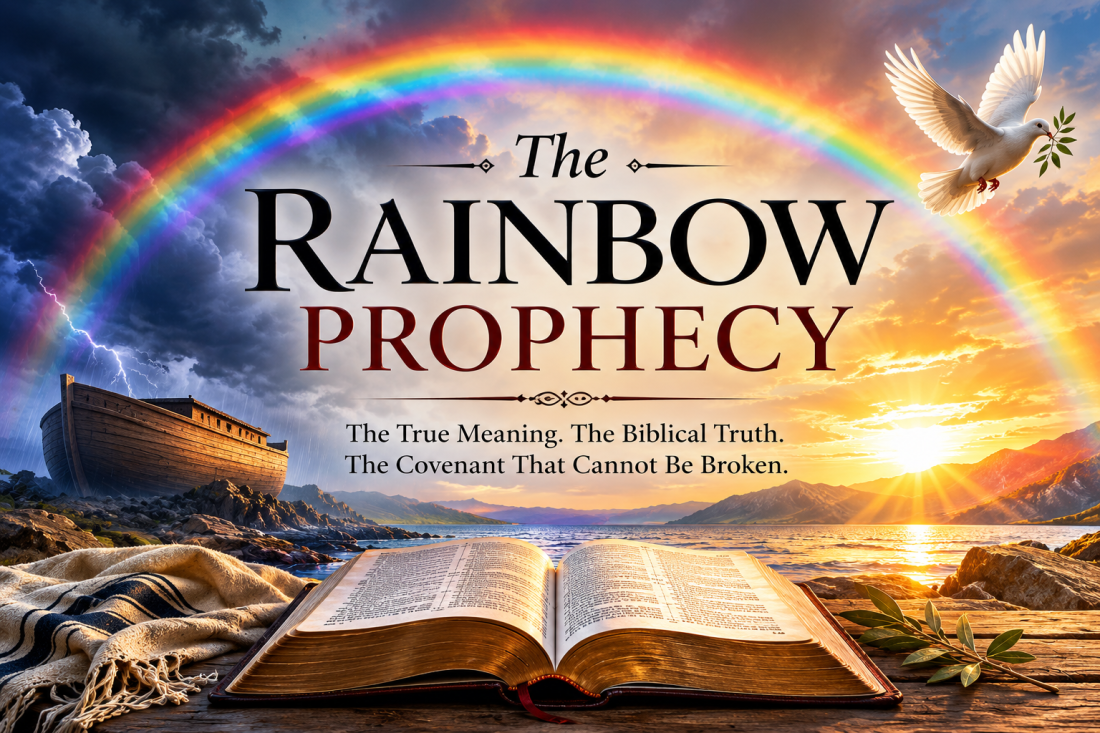
The Rainbow Prophecy

By Teresa Garciduenas | 2026

Introduction: A Symbol Contested

The rainbow has become one of the most contested symbols of our time. What was once universally recognized as the sign of God’s covenant with Noah—a promise that He would never again destroy the earth by flood—has been appropriated by the modern LGBTQ movement as the emblem of “Pride.” This appropriation is not merely cultural or aesthetic; it represents a profound theological claim about the nature of God, love, and human sexuality.

Progressive theology has increasingly championed the mantra “God is Love” as a comprehensive answer to questions about sexual ethics. The argument follows a simple trajectory: if God is love, and if love is the highest virtue, then any expression of love—including homosexual relationships—must be affirmed. Proponents of this view often claim there is no clear biblical evidence that God disapproves of homosexual activity, suggesting that traditional interpretations are culturally conditioned rather than scripturally grounded.

But what if the very symbol they have chosen—the rainbow—and the very name they have claimed—”Pride”—were prophesied in Scripture as signs of end-times rebellion? What if the appropriation of God’s glory by the proud was not an accident of history but a fulfillment of ancient prophecy?

This article examines the book of Ezekiel, particularly chapters 1 and 7, to demonstrate that the prophet foresaw a time when God’s most beautiful ornament—His glory, described with rainbow imagery—would be claimed by the proud and given to them in a defiled state. We will explore the comprehensive biblical teaching on sexual sin, the warning against the Nicolaitans who profess Christ while advocating for immorality, and the true reason for Sodom and Gomorrah’s destruction. Finally, we will consider whether we are witnessing the fulfillment of Ezekiel’s prophecy in real time.

Ezekiel’s Vision: God’s Glory and the Rainbow

The Glory Described (Ezekiel 1:26-28)

The prophet Ezekiel received one of the most vivid visions of God’s glory recorded in Scripture. In the first chapter, he describes an overwhelming encounter with the divine presence:

ESV: “And above the expanse over their heads there was the likeness of a throne, in appearance like sapphire; and seated above the likeness of a throne was a likeness with a human appearance. And upward from what had the appearance of his waist I saw as it were gleaming metal, like the appearance of fire enclosed all around. And downward from what had the appearance of his waist I saw as it were the appearance of fire, and there was brightness around him. Like the appearance of the bow that is in the cloud on the day of rain, so was the appearance of the brightness all around. Such was the appearance of the likeness of the glory of the LORD.” (Ezekiel 1:26-28)

The rainbow is not incidental to this vision—it is the defining characteristic of God’s glory. The radiance surrounding the throne, the visible manifestation of divine presence, is explicitly compared to “the appearance of the bow that is in the cloud on the day of rain.” This is God’s beautiful ornament, the visible expression of His majesty and holiness.

The Ornament Defiled (Ezekiel 7:19-20)

Six chapters later, Ezekiel delivers a devastating prophecy about what will happen to this beautiful ornament in the last days:

ESV KJV
“They cast their silver into the streets, and their gold is like an unclean thing. Their silver and gold are not able to deliver them in the day of the wrath of the LORD. They cannot satisfy their hunger or fill their stomachs with it. For it was the stumbling block of their iniquity. His beautiful ornament they used for pride, and they made their abominable images and their detestable things of it. Therefore I make it an unclean thing to them.” “They shall cast their silver in the streets, and their gold shall be removed: their silver and their gold shall not be able to deliver them in the day of the wrath of the LORD: they shall not satisfy their souls, neither fill their bowels: because it is the stumblingblock of their iniquity. As for the beauty of his ornament, he set it in majesty: but they made the images of their abominations and of their detestable things therein: therefore have I set it far from them.”

The phrase “His beautiful ornament” in the ESV directly identifies God’s ornament—the Hebrew tsebiy `ediy literally means “the beauty/glory of His ornament.” Contextually, this connects directly back to the glory described in chapter 1—the rainbow radiance that surrounds God’s throne.

The prophecy is clear: God’s beautiful ornament, set in majesty, will be taken by those who are proud. They will use it for their abominations and detestable things. And because of this defilement, God Himself will make it unclean for them—He will give them over to their pride.

The question we must ask is: Are we witnessing this prophecy fulfilled before our eyes?

The phrase “His beautiful ornament” in the ESV directly identifies God’s ornament—the Hebrew tsebiy `ediy literally means “the beauty/glory of His ornament.” Contextually, this connects directly back to the glory described in chapter 1—the rainbow radiance that surrounds God’s throne.

The prophecy is clear: God’s beautiful ornament, set in majesty, will be taken by those who are proud. They will use it for their abominations and detestable things. And because of this defilement, God Himself will make it unclean for them—He will give them over to their pride.

The question we must ask is: Are we witnessing this prophecy fulfilled before our eyes?

The Comprehensive Biblical Witness on Sexual Sin

The claim that there is “no biblical evidence” against homosexual activity is demonstrably false. Scripture addresses sexual ethics with remarkable consistency across both testaments, establishing clear boundaries for human sexuality within God’s created order.

Old Testament Foundation

The Levitical law explicitly prohibits homosexual practice:

“You shall not lie with a male as with a woman; it is an abomination.” (Leviticus 18:22, ESV)

“If a man lies with a male as with a woman, both of them have committed an abomination; they shall surely be put to death; their blood is upon them.” (Leviticus 20:13, ESV)

The Hebrew word toevah (abomination) is used throughout Leviticus to describe practices that violate God’s created order and holiness. This is not merely ceremonial law that passed away with Christ; it is moral law rooted in the creation design of male and female complementarity (Genesis 1:27, 2:24).

New Testament Confirmation

The New Testament does not soften this teaching but reinforces it with theological clarity:

Romans 1:26-27 (ESV): “For this reason God gave them up to dishonorable passions. For their women exchanged natural relations for those that are contrary to nature; and the men likewise gave up natural relations with women and were consumed with passion for one another, men committing shameless acts with men and receiving in themselves the due penalty for their error.”

Paul describes homosexual practice as “dishonorable passions,” “contrary to nature,” and “shameless acts”—language that echoes the Levitical toevah. Critically, he frames this as part of God’s judgment: “God gave them up.” When humanity exchanges the truth of God for a lie and worships created things rather than the Creator, God gives them over to the consequences of their rebellion.

1 Corinthians 6:9-10 (ESV): “Or do you not know that the unrighteous will not inherit the kingdom of God? Do not be deceived: neither the sexually immoral, nor idolaters, nor adulterers, nor men who practice homosexuality, nor thieves, nor the greedy, nor drunkards, nor revilers, nor swindlers will inherit the kingdom of God.”

The Greek terms malakoi (passive partners) and arsenokoitai (active partners) specifically refer to homosexual practice. Paul places this alongside other sexual sins and makes clear that those who practice such things—without repentance—will not inherit God’s kingdom.

1 Timothy 1:9-10 (ESV): “understanding this, that the law is not laid down for the just but for the lawless and disobedient, for the ungodly and sinners, for the unholy and profane, for those who strike their fathers and mothers, for murderers, the sexually immoral, men who practice homosexuality, enslavers, liars, perjurers, and whatever else is contrary to sound doctrine.”

Again, arsenokoitai appears in a list of behaviors contrary to sound doctrine and the gospel of Christ.

The Pattern of Scripture

From Genesis to Revelation, Scripture presents a consistent sexual ethic: sexuality is a gift from God to be expressed exclusively within the covenant of marriage between one man and one woman. Any deviation from this pattern—whether heterosexual fornication, adultery, or homosexual practice—is identified as sin requiring repentance.

The claim that there is no biblical evidence against homosexual activity requires either profound ignorance of Scripture or willful rejection of its plain teaching.

The Sin of the Nicolaitans: Professing Christ While Advocating Sin

The book of Revelation introduces a troubling category of false teaching that has direct relevance to our current moment:

“Yet this you have: you hate the works of the Nicolaitans, which I also hate.” (Revelation 2:6, ESV)

“So also you have some who hold the teaching of the Nicolaitans.” (Revelation 2:15, ESV)

While the exact identity of the Nicolaitans is debated, early church fathers consistently identified them as those who claimed Christian faith while advocating for sexual immorality and compromise with pagan culture. Irenaeus wrote that they “lived lives of unrestrained indulgence.” Clement of Alexandria described them as teaching that one could participate in sexual immorality without consequence because grace covered all sin.

This is the essence of Nicolaitan doctrine: professing Christ while advocating for practices He explicitly condemns. It is not merely committing sin—all Christians struggle with sin—but rather teaching that sin is acceptable, that God’s standards have changed, that love negates holiness.

We see this pattern replicated in modern progressive Christianity. Churches fly rainbow flags and perform same-sex marriages while claiming the name of Christ. Pastors and theologians argue that biblical prohibitions were culturally conditioned and no longer apply. The mantra “God is Love” is weaponized to override “God is Holy.”

This is precisely what Jesus hates about the Nicolaitans: they corrupt the gospel by removing the call to repentance and holiness. They make grace an excuse for license rather than the power for transformation.

“What shall we say then? Are we to continue in sin that grace may abound? By no means! How can we who died to sin still live in it?” (Romans 6:1-2, ESV)

The Nicolaitan spirit is alive and well in churches that celebrate Pride Month, affirm homosexual practice, and condemn those who hold to biblical sexual ethics as “unloving” or “hateful.”

Sodom and Gomorrah: Pride or Sexual Sin?

A common progressive argument attempts to reframe the destruction of Sodom and Gomorrah as judgment for pride and inhospitality rather than sexual sin. This argument typically cites Ezekiel 16:49:

“Behold, this was the guilt of your sister Sodom: she and her daughters had pride, excess of food, and prosperous ease, but did not aid the poor and needy.” (Ezekiel 16:49, ESV)

On the surface, this appears to support the claim that Sodom’s sin was pride rather than homosexuality. However, this interpretation ignores both the immediate context and the broader biblical witness.

The Immediate Context

The very next verse continues: “They were haughty and did an abomination before me. So I removed them, when I saw it.” (Ezekiel 16:50, ESV)

The word “abomination” is again toevah—the same term used in Leviticus 18:22 for homosexual practice. Ezekiel is not saying Sodom’s only sin was pride; he is saying their pride led them to commit abominable sexual sins.

The Genesis Account

The Genesis narrative makes the sexual nature of Sodom’s sin explicit:

“But before they lay down, the men of the city, the men of Sodom, both young and old, all the people to the last man, surrounded the house. And they called to Lot, ‘Where are the men who came to you tonight? Bring them out to us, that we may know them.'” (Genesis 19:4-5, ESV)

The Hebrew yada (to know) is used here in its sexual sense, as confirmed by Lot’s response offering his virgin daughters instead. The men of Sodom were attempting gang rape of Lot’s male guests—a clear expression of violent homosexual lust.

Jude’s Confirmation

The New Testament removes any ambiguity:

“just as Sodom and Gomorrah and the surrounding cities, which likewise indulged in sexual immorality and pursued unnatural desire, serve as an example by undergoing a punishment of eternal fire.” (Jude 1:7, ESV)

The phrase “pursued unnatural desire” (literally “went after strange flesh”) specifically identifies sexual perversion as the reason for judgment.

Resolving the Apparent Contradiction

There is no contradiction between Ezekiel 16:49 and the rest of Scripture. Pride was the root sin that led to sexual perversion. The progression is clear: arrogance and self-sufficiency led to moral decay, which manifested in abominable sexual practices. God judged both the pride and its fruit.

This pattern mirrors Romans 1, where humanity’s refusal to honor God (pride) leads to God giving them over to dishonorable passions (sexual immorality). Pride and sexual sin are not competing explanations—they are cause and effect.

The attempt to separate Sodom’s pride from its sexual sin is exegetically dishonest and ignores the consistent biblical testimony across multiple books and both testaments.

Prophecy Fulfilled: Pride Claims the Rainbow

We return now to Ezekiel’s prophecy with new eyes. The prophet saw God’s glory surrounded by rainbow radiance—the beauty of His ornament set in majesty. He prophesied that in the last days, the proud would take this ornament and use it for their abominations, and God would give it to them as unclean.

Consider what we are witnessing:

  1. The Symbol: The rainbow, which represents God’s glory and covenant faithfulness, has been appropriated as the symbol of a movement celebrating sexual practices God calls abominable.
  2. The Name: The movement does not call itself “Love” or “Equality” or “Justice”—it calls itself “Pride.” The very sin Ezekiel identified as the root of taking God’s ornament is the name emblazoned on flags, parades, and corporate logos.
  3. The Timing: This appropriation has occurred in what many theologians identify as the end times, characterized by widespread apostasy, the love of many growing cold, and people calling evil good and good evil (Matthew 24:12; Isaiah 5:20).
  4. The Defilement: God said He would make His ornament unclean for those who defiled it. The rainbow, once universally recognized as a sign of God’s mercy and promise, is now associated in the public mind with sexual practices contrary to His design. The symbol has been made unclean.
  5. The Church’s Compromise: Just as the Nicolaitans professed Christ while advocating immorality, many churches now fly rainbow flags and perform same-sex marriages, fulfilling the prophecy of end-times apostasy (2 Timothy 4:3-4).

This is not coincidence. This is not merely cultural evolution. This is the fulfillment of specific biblical prophecy about the proud taking God’s beautiful ornament and using it for abominations.

Conclusion: A Call to Clarity

The question before the church is not whether God is love—He absolutely is (1 John 4:8). The question is whether God’s love negates His holiness, whether grace eliminates the need for repentance, whether cultural pressure can override biblical truth.

The answer Scripture gives is unequivocal: “God is love” and “God is holy” are not competing truths but complementary realities. His love is expressed precisely in calling us out of sin and into righteousness. His grace empowers transformation, not license.

The appropriation of the rainbow by the Pride movement is not a neutral cultural development. It is the fulfillment of Ezekiel’s prophecy about the proud taking God’s beautiful ornament and defiling it with abominations. The movement’s very name—Pride—identifies the root sin that Ezekiel warned would lead to this defilement.

The comprehensive biblical witness on sexual sin, from Leviticus to Romans to Revelation, leaves no room for ambiguity. The warning against the Nicolaitans—those who profess Christ while advocating sin—speaks directly to churches that celebrate Pride Month. The true reason for Sodom’s destruction, confirmed across multiple biblical texts, demonstrates that God’s judgment falls on sexual perversion rooted in pride.

We are living in the days Ezekiel foresaw. The rainbow has been claimed by the proud. God has given them over to their desires, making His ornament unclean in their hands. The question for believers is whether we will stand with biblical truth or compromise with cultural pressure.

“And if it is evil in your eyes to serve the LORD, choose this day whom you will serve, whether the gods your fathers served in the region beyond the River, or the gods of the Amorites in whose land you dwell. But as for me and my house, we will serve the LORD.” (Joshua 24:15, ESV)

The rainbow belongs to God. It always has. It always will. And one day, every knee will bow and every tongue confess that Jesus Christ is Lord—including those who claimed His glory for their pride.

References

Crossway Bibles. (2001). The Holy Bible, English Standard Version. Crossway Bibles.

Biblical References (ESV)

Genesis

Crossway Bibles. (2001). Genesis 1:27–28. In The Holy Bible, English Standard Version (p. 1). Crossway Bibles.

Crossway Bibles. (2001). Genesis 19:1–29. In The Holy Bible, English Standard Version (pp. 18–19). Crossway Bibles.

Exodus

Crossway Bibles. (2001). Exodus 20:14. In The Holy Bible, English Standard Version (p. 71). Crossway Bibles.

Leviticus

Crossway Bibles. (2001). Leviticus 18:22. In The Holy Bible, English Standard Version (p. 107). Crossway Bibles.

Crossway Bibles. (2001). Leviticus 20:13. In The Holy Bible, English Standard Version (p. 109). Crossway Bibles.

Ezekiel

Crossway Bibles. (2001). Ezekiel 1:26–28. In The Holy Bible, English Standard Version (pp. 747–748). Crossway Bibles.

Crossway Bibles. (2001). Ezekiel 7:19–20. In The Holy Bible, English Standard Version (p. 754). Crossway Bibles.

Joshua

Crossway Bibles. (2001). Joshua 24:15. In The Holy Bible, English Standard Version (p. 227). Crossway Bibles.

Romans

Crossway Bibles. (2001). Romans 1:26–27. In The Holy Bible, English Standard Version (p. 1134). Crossway Bibles.

Crossway Bibles. (2001). Romans 1:32. In The Holy Bible, English Standard Version (p. 1134). Crossway Bibles.

1 Corinthians

Crossway Bibles. (2001). 1 Corinthians 6:9–11. In The Holy Bible, English Standard Version (p. 1157). Crossway Bibles.

1 Timothy

Crossway Bibles. (2001). 1 Timothy 1:8–10. In The Holy Bible, English Standard Version (p. 1219). Crossway Bibles.

2 Timothy

Crossway Bibles. (2001). 2 Timothy 3:16–17. In The Holy Bible, English Standard Version (p. 1230). Crossway Bibles.

1 John

Crossway Bibles. (2001). 1 John 2:15–17. In The Holy Bible, English Standard Version (p. 1289). Crossway Bibles.

Revelation

Crossway Bibles. (2001). Revelation 2:6. In The Holy Bible, English Standard Version (p. 1317). Crossway Bibles.

Crossway Bibles. (2001). Revelation 2:15. In The Holy Bible, English Standard Version (p. 1317). Crossway Bibles.


Note: All biblical passages cited in this article are from the English Standard Version (ESV) unless otherwise noted. The ESV is a word-for-word translation emphasizing accuracy and readability for theological study.


The Journey Begins

Every journey begins with a choice of which path to follow.

The Discerning Path was created as a place to examine Scripture, history, culture, and the events unfolding around us through the lens of a biblical worldview. In an age overflowing with information, competing voices, and shifting definitions of truth, discernment has become more important than ever.

This journey is about returning to the Word of God as our foundation—asking difficult questions, examining what we have been taught, and learning to distinguish truth from deception. We will explore Scripture in its historical and cultural context while considering how ancient biblical themes continue to echo through the world around us.

The goal is not simply to collect information, but to grow in wisdom and discernment as we follow the path God has illuminated before us: “Your word is a lamp to my feet and a light to my path.” — Psalm 119:105