
By Teresa Garciduenas | 2026
Introduction: A Symbol Contested
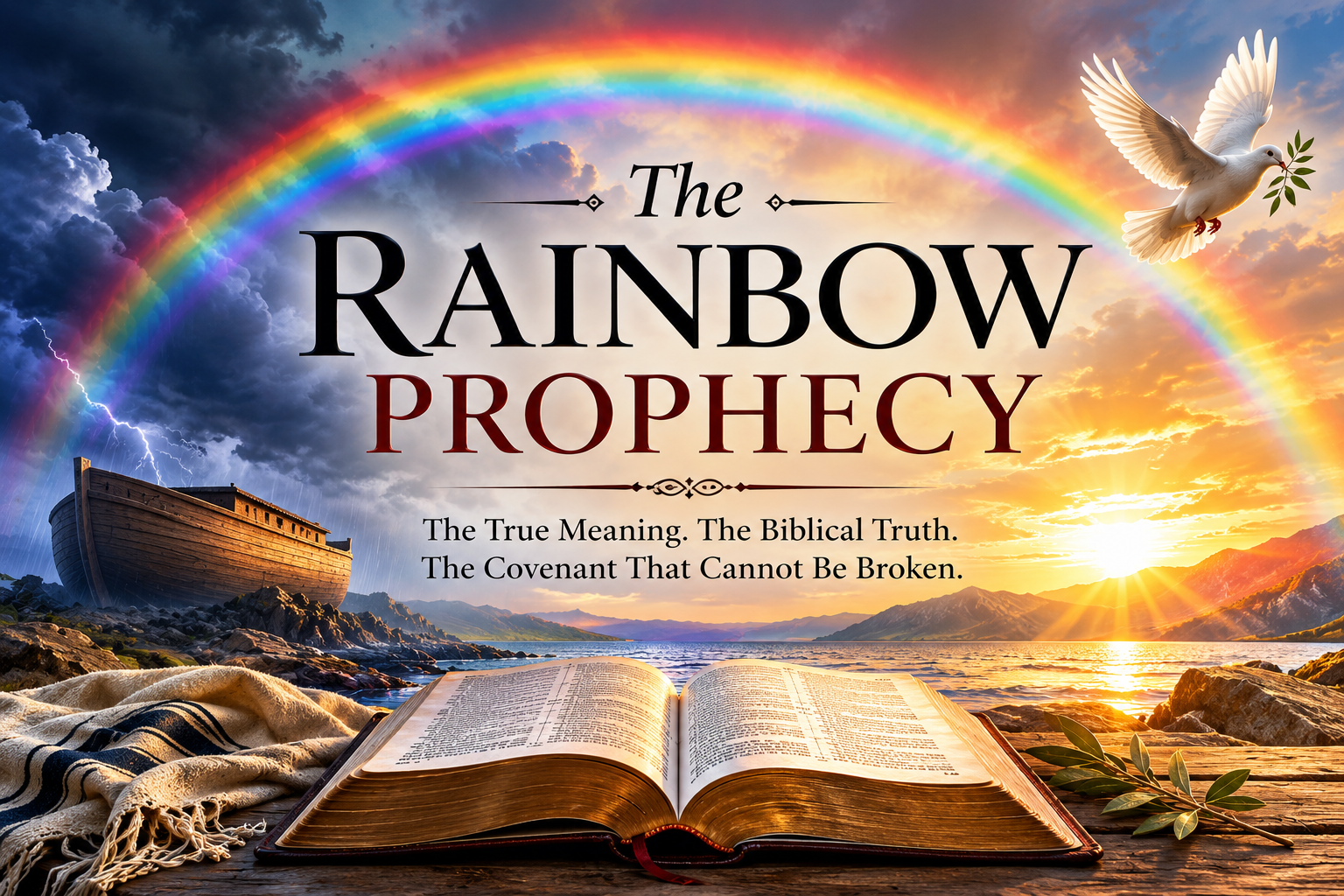
The rainbow has become one of the most contested symbols of our time. What was once universally recognized as the sign of God’s covenant with Noah—a promise that He would never again destroy the earth by flood—has been appropriated by the modern LGBTQ movement as the emblem of “Pride.” This appropriation is not merely cultural or aesthetic; it represents a profound theological claim about the nature of God, love, and human sexuality.
Progressive theology has increasingly championed the mantra “God is Love” as a comprehensive answer to questions about sexual ethics. The argument follows a simple trajectory: if God is love, and if love is the highest virtue, then any expression of love—including homosexual relationships—must be affirmed. Proponents of this view often claim there is no clear biblical evidence that God disapproves of homosexual activity, suggesting that traditional interpretations are culturally conditioned rather than scripturally grounded.
But what if the very symbol they have chosen—the rainbow—and the very name they have claimed—”Pride”—were prophesied in Scripture as signs of end-times rebellion? What if the appropriation of God’s glory by the proud was not an accident of history but a fulfillment of ancient prophecy?
This article examines the book of Ezekiel, particularly chapters 1 and 7, to demonstrate that the prophet foresaw a time when God’s most beautiful ornament—His glory, described with rainbow imagery—would be claimed by the proud and given to them in a defiled state. We will explore the comprehensive biblical teaching on sexual sin, the warning against the Nicolaitans who profess Christ while advocating for immorality, and the true reason for Sodom and Gomorrah’s destruction. Finally, we will consider whether we are witnessing the fulfillment of Ezekiel’s prophecy in real time.
Ezekiel’s Vision: God’s Glory and the Rainbow
The Glory Described (Ezekiel 1:26-28)
The prophet Ezekiel received one of the most vivid visions of God’s glory recorded in Scripture. In the first chapter, he describes an overwhelming encounter with the divine presence:
ESV: “And above the expanse over their heads there was the likeness of a throne, in appearance like sapphire; and seated above the likeness of a throne was a likeness with a human appearance. And upward from what had the appearance of his waist I saw as it were gleaming metal, like the appearance of fire enclosed all around. And downward from what had the appearance of his waist I saw as it were the appearance of fire, and there was brightness around him. Like the appearance of the bow that is in the cloud on the day of rain, so was the appearance of the brightness all around. Such was the appearance of the likeness of the glory of the LORD.” (Ezekiel 1:26-28)
The rainbow is not incidental to this vision—it is the defining characteristic of God’s glory. The radiance surrounding the throne, the visible manifestation of divine presence, is explicitly compared to “the appearance of the bow that is in the cloud on the day of rain.” This is God’s beautiful ornament, the visible expression of His majesty and holiness.
The Ornament Defiled (Ezekiel 7:19-20)
Six chapters later, Ezekiel delivers a devastating prophecy about what will happen to this beautiful ornament in the last days:
| ESV | KJV |
|---|---|
| “They cast their silver into the streets, and their gold is like an unclean thing. Their silver and gold are not able to deliver them in the day of the wrath of the LORD. They cannot satisfy their hunger or fill their stomachs with it. For it was the stumbling block of their iniquity. His beautiful ornament they used for pride, and they made their abominable images and their detestable things of it. Therefore I make it an unclean thing to them.” | “They shall cast their silver in the streets, and their gold shall be removed: their silver and their gold shall not be able to deliver them in the day of the wrath of the LORD: they shall not satisfy their souls, neither fill their bowels: because it is the stumblingblock of their iniquity. As for the beauty of his ornament, he set it in majesty: but they made the images of their abominations and of their detestable things therein: therefore have I set it far from them.” |
The phrase “His beautiful ornament” in the ESV directly identifies God’s ornament—the Hebrew tsebiy `ediy literally means “the beauty/glory of His ornament.” Contextually, this connects directly back to the glory described in chapter 1—the rainbow radiance that surrounds God’s throne.
The prophecy is clear: God’s beautiful ornament, set in majesty, will be taken by those who are proud. They will use it for their abominations and detestable things. And because of this defilement, God Himself will make it unclean for them—He will give them over to their pride.
The question we must ask is: Are we witnessing this prophecy fulfilled before our eyes?
The phrase “His beautiful ornament” in the ESV directly identifies God’s ornament—the Hebrew tsebiy `ediy literally means “the beauty/glory of His ornament.” Contextually, this connects directly back to the glory described in chapter 1—the rainbow radiance that surrounds God’s throne.
The prophecy is clear: God’s beautiful ornament, set in majesty, will be taken by those who are proud. They will use it for their abominations and detestable things. And because of this defilement, God Himself will make it unclean for them—He will give them over to their pride.
The question we must ask is: Are we witnessing this prophecy fulfilled before our eyes?
The Comprehensive Biblical Witness on Sexual Sin
The claim that there is “no biblical evidence” against homosexual activity is demonstrably false. Scripture addresses sexual ethics with remarkable consistency across both testaments, establishing clear boundaries for human sexuality within God’s created order.
Old Testament Foundation
The Levitical law explicitly prohibits homosexual practice:
“You shall not lie with a male as with a woman; it is an abomination.” (Leviticus 18:22, ESV)
“If a man lies with a male as with a woman, both of them have committed an abomination; they shall surely be put to death; their blood is upon them.” (Leviticus 20:13, ESV)
The Hebrew word toevah (abomination) is used throughout Leviticus to describe practices that violate God’s created order and holiness. This is not merely ceremonial law that passed away with Christ; it is moral law rooted in the creation design of male and female complementarity (Genesis 1:27, 2:24).
New Testament Confirmation
The New Testament does not soften this teaching but reinforces it with theological clarity:
Romans 1:26-27 (ESV): “For this reason God gave them up to dishonorable passions. For their women exchanged natural relations for those that are contrary to nature; and the men likewise gave up natural relations with women and were consumed with passion for one another, men committing shameless acts with men and receiving in themselves the due penalty for their error.”
Paul describes homosexual practice as “dishonorable passions,” “contrary to nature,” and “shameless acts”—language that echoes the Levitical toevah. Critically, he frames this as part of God’s judgment: “God gave them up.” When humanity exchanges the truth of God for a lie and worships created things rather than the Creator, God gives them over to the consequences of their rebellion.
1 Corinthians 6:9-10 (ESV): “Or do you not know that the unrighteous will not inherit the kingdom of God? Do not be deceived: neither the sexually immoral, nor idolaters, nor adulterers, nor men who practice homosexuality, nor thieves, nor the greedy, nor drunkards, nor revilers, nor swindlers will inherit the kingdom of God.”
The Greek terms malakoi (passive partners) and arsenokoitai (active partners) specifically refer to homosexual practice. Paul places this alongside other sexual sins and makes clear that those who practice such things—without repentance—will not inherit God’s kingdom.
1 Timothy 1:9-10 (ESV): “understanding this, that the law is not laid down for the just but for the lawless and disobedient, for the ungodly and sinners, for the unholy and profane, for those who strike their fathers and mothers, for murderers, the sexually immoral, men who practice homosexuality, enslavers, liars, perjurers, and whatever else is contrary to sound doctrine.”
Again, arsenokoitai appears in a list of behaviors contrary to sound doctrine and the gospel of Christ.
The Pattern of Scripture
From Genesis to Revelation, Scripture presents a consistent sexual ethic: sexuality is a gift from God to be expressed exclusively within the covenant of marriage between one man and one woman. Any deviation from this pattern—whether heterosexual fornication, adultery, or homosexual practice—is identified as sin requiring repentance.
The claim that there is no biblical evidence against homosexual activity requires either profound ignorance of Scripture or willful rejection of its plain teaching.
The Sin of the Nicolaitans: Professing Christ While Advocating Sin
The book of Revelation introduces a troubling category of false teaching that has direct relevance to our current moment:
“Yet this you have: you hate the works of the Nicolaitans, which I also hate.” (Revelation 2:6, ESV)
“So also you have some who hold the teaching of the Nicolaitans.” (Revelation 2:15, ESV)
While the exact identity of the Nicolaitans is debated, early church fathers consistently identified them as those who claimed Christian faith while advocating for sexual immorality and compromise with pagan culture. Irenaeus wrote that they “lived lives of unrestrained indulgence.” Clement of Alexandria described them as teaching that one could participate in sexual immorality without consequence because grace covered all sin.
This is the essence of Nicolaitan doctrine: professing Christ while advocating for practices He explicitly condemns. It is not merely committing sin—all Christians struggle with sin—but rather teaching that sin is acceptable, that God’s standards have changed, that love negates holiness.
We see this pattern replicated in modern progressive Christianity. Churches fly rainbow flags and perform same-sex marriages while claiming the name of Christ. Pastors and theologians argue that biblical prohibitions were culturally conditioned and no longer apply. The mantra “God is Love” is weaponized to override “God is Holy.”
This is precisely what Jesus hates about the Nicolaitans: they corrupt the gospel by removing the call to repentance and holiness. They make grace an excuse for license rather than the power for transformation.
“What shall we say then? Are we to continue in sin that grace may abound? By no means! How can we who died to sin still live in it?” (Romans 6:1-2, ESV)
The Nicolaitan spirit is alive and well in churches that celebrate Pride Month, affirm homosexual practice, and condemn those who hold to biblical sexual ethics as “unloving” or “hateful.”
Sodom and Gomorrah: Pride or Sexual Sin?
A common progressive argument attempts to reframe the destruction of Sodom and Gomorrah as judgment for pride and inhospitality rather than sexual sin. This argument typically cites Ezekiel 16:49:
“Behold, this was the guilt of your sister Sodom: she and her daughters had pride, excess of food, and prosperous ease, but did not aid the poor and needy.” (Ezekiel 16:49, ESV)
On the surface, this appears to support the claim that Sodom’s sin was pride rather than homosexuality. However, this interpretation ignores both the immediate context and the broader biblical witness.
The Immediate Context
The very next verse continues: “They were haughty and did an abomination before me. So I removed them, when I saw it.” (Ezekiel 16:50, ESV)
The word “abomination” is again toevah—the same term used in Leviticus 18:22 for homosexual practice. Ezekiel is not saying Sodom’s only sin was pride; he is saying their pride led them to commit abominable sexual sins.
The Genesis Account
The Genesis narrative makes the sexual nature of Sodom’s sin explicit:
“But before they lay down, the men of the city, the men of Sodom, both young and old, all the people to the last man, surrounded the house. And they called to Lot, ‘Where are the men who came to you tonight? Bring them out to us, that we may know them.'” (Genesis 19:4-5, ESV)
The Hebrew yada (to know) is used here in its sexual sense, as confirmed by Lot’s response offering his virgin daughters instead. The men of Sodom were attempting gang rape of Lot’s male guests—a clear expression of violent homosexual lust.
Jude’s Confirmation
The New Testament removes any ambiguity:
“just as Sodom and Gomorrah and the surrounding cities, which likewise indulged in sexual immorality and pursued unnatural desire, serve as an example by undergoing a punishment of eternal fire.” (Jude 1:7, ESV)
The phrase “pursued unnatural desire” (literally “went after strange flesh”) specifically identifies sexual perversion as the reason for judgment.
Resolving the Apparent Contradiction
There is no contradiction between Ezekiel 16:49 and the rest of Scripture. Pride was the root sin that led to sexual perversion. The progression is clear: arrogance and self-sufficiency led to moral decay, which manifested in abominable sexual practices. God judged both the pride and its fruit.
This pattern mirrors Romans 1, where humanity’s refusal to honor God (pride) leads to God giving them over to dishonorable passions (sexual immorality). Pride and sexual sin are not competing explanations—they are cause and effect.
The attempt to separate Sodom’s pride from its sexual sin is exegetically dishonest and ignores the consistent biblical testimony across multiple books and both testaments.
Prophecy Fulfilled: Pride Claims the Rainbow
We return now to Ezekiel’s prophecy with new eyes. The prophet saw God’s glory surrounded by rainbow radiance—the beauty of His ornament set in majesty. He prophesied that in the last days, the proud would take this ornament and use it for their abominations, and God would give it to them as unclean.
Consider what we are witnessing:
- The Symbol: The rainbow, which represents God’s glory and covenant faithfulness, has been appropriated as the symbol of a movement celebrating sexual practices God calls abominable.
- The Name: The movement does not call itself “Love” or “Equality” or “Justice”—it calls itself “Pride.” The very sin Ezekiel identified as the root of taking God’s ornament is the name emblazoned on flags, parades, and corporate logos.
- The Timing: This appropriation has occurred in what many theologians identify as the end times, characterized by widespread apostasy, the love of many growing cold, and people calling evil good and good evil (Matthew 24:12; Isaiah 5:20).
- The Defilement: God said He would make His ornament unclean for those who defiled it. The rainbow, once universally recognized as a sign of God’s mercy and promise, is now associated in the public mind with sexual practices contrary to His design. The symbol has been made unclean.
- The Church’s Compromise: Just as the Nicolaitans professed Christ while advocating immorality, many churches now fly rainbow flags and perform same-sex marriages, fulfilling the prophecy of end-times apostasy (2 Timothy 4:3-4).
This is not coincidence. This is not merely cultural evolution. This is the fulfillment of specific biblical prophecy about the proud taking God’s beautiful ornament and using it for abominations.
Conclusion: A Call to Clarity
The question before the church is not whether God is love—He absolutely is (1 John 4:8). The question is whether God’s love negates His holiness, whether grace eliminates the need for repentance, whether cultural pressure can override biblical truth.
The answer Scripture gives is unequivocal: “God is love” and “God is holy” are not competing truths but complementary realities. His love is expressed precisely in calling us out of sin and into righteousness. His grace empowers transformation, not license.
The appropriation of the rainbow by the Pride movement is not a neutral cultural development. It is the fulfillment of Ezekiel’s prophecy about the proud taking God’s beautiful ornament and defiling it with abominations. The movement’s very name—Pride—identifies the root sin that Ezekiel warned would lead to this defilement.
The comprehensive biblical witness on sexual sin, from Leviticus to Romans to Revelation, leaves no room for ambiguity. The warning against the Nicolaitans—those who profess Christ while advocating sin—speaks directly to churches that celebrate Pride Month. The true reason for Sodom’s destruction, confirmed across multiple biblical texts, demonstrates that God’s judgment falls on sexual perversion rooted in pride.
We are living in the days Ezekiel foresaw. The rainbow has been claimed by the proud. God has given them over to their desires, making His ornament unclean in their hands. The question for believers is whether we will stand with biblical truth or compromise with cultural pressure.
“And if it is evil in your eyes to serve the LORD, choose this day whom you will serve, whether the gods your fathers served in the region beyond the River, or the gods of the Amorites in whose land you dwell. But as for me and my house, we will serve the LORD.” (Joshua 24:15, ESV)
The rainbow belongs to God. It always has. It always will. And one day, every knee will bow and every tongue confess that Jesus Christ is Lord—including those who claimed His glory for their pride.
References
Crossway Bibles. (2001). The Holy Bible, English Standard Version. Crossway Bibles.
Biblical References (ESV)
Genesis
Crossway Bibles. (2001). Genesis 1:27–28. In The Holy Bible, English Standard Version (p. 1). Crossway Bibles.
Crossway Bibles. (2001). Genesis 19:1–29. In The Holy Bible, English Standard Version (pp. 18–19). Crossway Bibles.
Exodus
Crossway Bibles. (2001). Exodus 20:14. In The Holy Bible, English Standard Version (p. 71). Crossway Bibles.
Leviticus
Crossway Bibles. (2001). Leviticus 18:22. In The Holy Bible, English Standard Version (p. 107). Crossway Bibles.
Crossway Bibles. (2001). Leviticus 20:13. In The Holy Bible, English Standard Version (p. 109). Crossway Bibles.
Ezekiel
Crossway Bibles. (2001). Ezekiel 1:26–28. In The Holy Bible, English Standard Version (pp. 747–748). Crossway Bibles.
Crossway Bibles. (2001). Ezekiel 7:19–20. In The Holy Bible, English Standard Version (p. 754). Crossway Bibles.
Joshua
Crossway Bibles. (2001). Joshua 24:15. In The Holy Bible, English Standard Version (p. 227). Crossway Bibles.
Romans
Crossway Bibles. (2001). Romans 1:26–27. In The Holy Bible, English Standard Version (p. 1134). Crossway Bibles.
Crossway Bibles. (2001). Romans 1:32. In The Holy Bible, English Standard Version (p. 1134). Crossway Bibles.
1 Corinthians
Crossway Bibles. (2001). 1 Corinthians 6:9–11. In The Holy Bible, English Standard Version (p. 1157). Crossway Bibles.
1 Timothy
Crossway Bibles. (2001). 1 Timothy 1:8–10. In The Holy Bible, English Standard Version (p. 1219). Crossway Bibles.
2 Timothy
Crossway Bibles. (2001). 2 Timothy 3:16–17. In The Holy Bible, English Standard Version (p. 1230). Crossway Bibles.
1 John
Crossway Bibles. (2001). 1 John 2:15–17. In The Holy Bible, English Standard Version (p. 1289). Crossway Bibles.
Revelation
Crossway Bibles. (2001). Revelation 2:6. In The Holy Bible, English Standard Version (p. 1317). Crossway Bibles.
Crossway Bibles. (2001). Revelation 2:15. In The Holy Bible, English Standard Version (p. 1317). Crossway Bibles.
Note: All biblical passages cited in this article are from the English Standard Version (ESV) unless otherwise noted. The ESV is a word-for-word translation emphasizing accuracy and readability for theological study.
 The Discerning Path